Stable commitment to every leap, customized every flat
Blog


Suning County, Cangzhou City, Hebei Province, China
16630207375
dxfloor144@gmail.com
Stable commitment to every leap, customized every flat
Blog
In the construction and renovation of schools, the choice of flooring materials directly affects student safety, teaching efficiency, and long-term operating costs. Schools have complex and diverse usage scenarios, covering classrooms, corridors, indoor and outdoor sports activity areas, dance studios, canteens, and other areas, which places diverse demands on flooring materials—wear resistance, slip resistance, environmental friendliness, ease of maintenance, and adaptability to multiple scenarios are all indispensable core indicators.
Among the many school flooring materials, interlocking tiles and PVC flooring stand out with their outstanding performance-to-price ratio and scenario compatibility, and have become the mainstream choices for primary and secondary school campuses. This article will take these two materials as the core, deeply analyze their product characteristics, performance advantages, scenario adaptation logic, and selection and construction key points, providing a professional reference for school infrastructure builders and renovation decision-makers.
Whether it's a kindergarten, high school, or university, schools have a large number of students who are very active. The flooring must have excellent anti-slip properties (dry and wet friction coefficients meeting standards) and impact absorption to reduce the risk of falls and joint injuries during running and activities.
Students spend a lot of time in the school environment; therefore, the flooring must meet strict environmental standards, with zero formaldehyde emissions and low VOC content to prevent harmful gas emissions from affecting health.
School corridors, gymnasiums, and other areas with high traffic need to withstand long-term friction from students' shoes and desks/chairs. Simultaneously, it should be easy to clean, quickly removing stains such as ink, food scraps, and spilled drinks.
Different functional areas in a school have different requirements for flooring materials. For example, gymnasiums need good elasticity, dance studios need precise force feedback, cafeterias need waterproof and oil-proof properties, and classrooms need quiet and comfortable environments.
Cost control: Schools have limited funds for infrastructure construction. The selection of flooring materials needs to strike a balance between initial investment and long-term maintenance costs to avoid high replacement costs due to material aging.
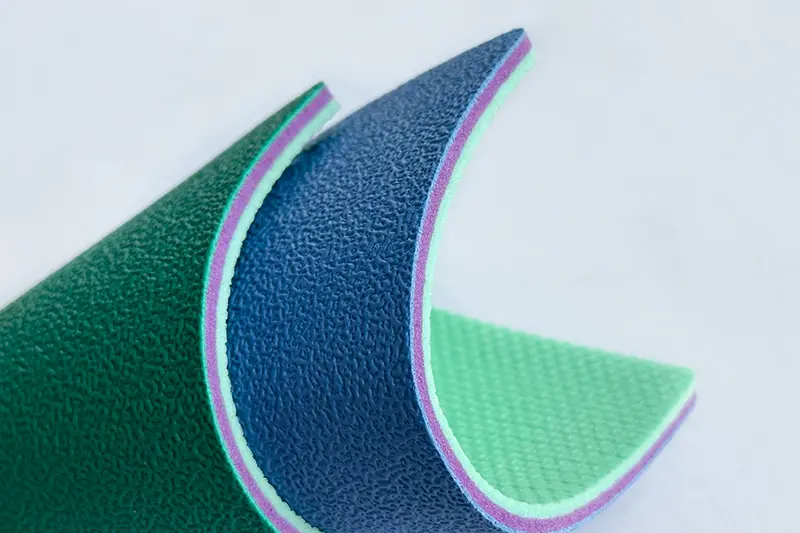
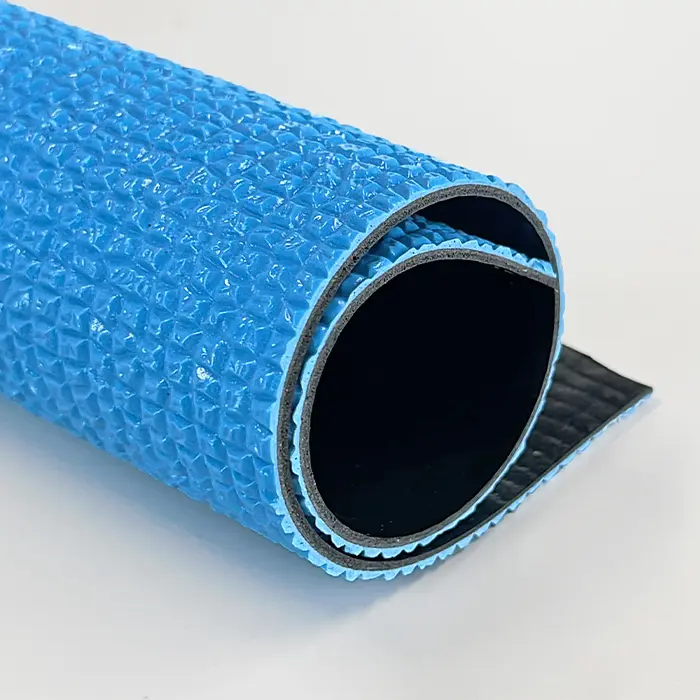
PVC flooring is a flexible roll or sheet material, available in sports and commercial versions. These two types differ in structure and thickness, making them suitable for various settings such as school sports fields, classrooms, and multi-functional areas.
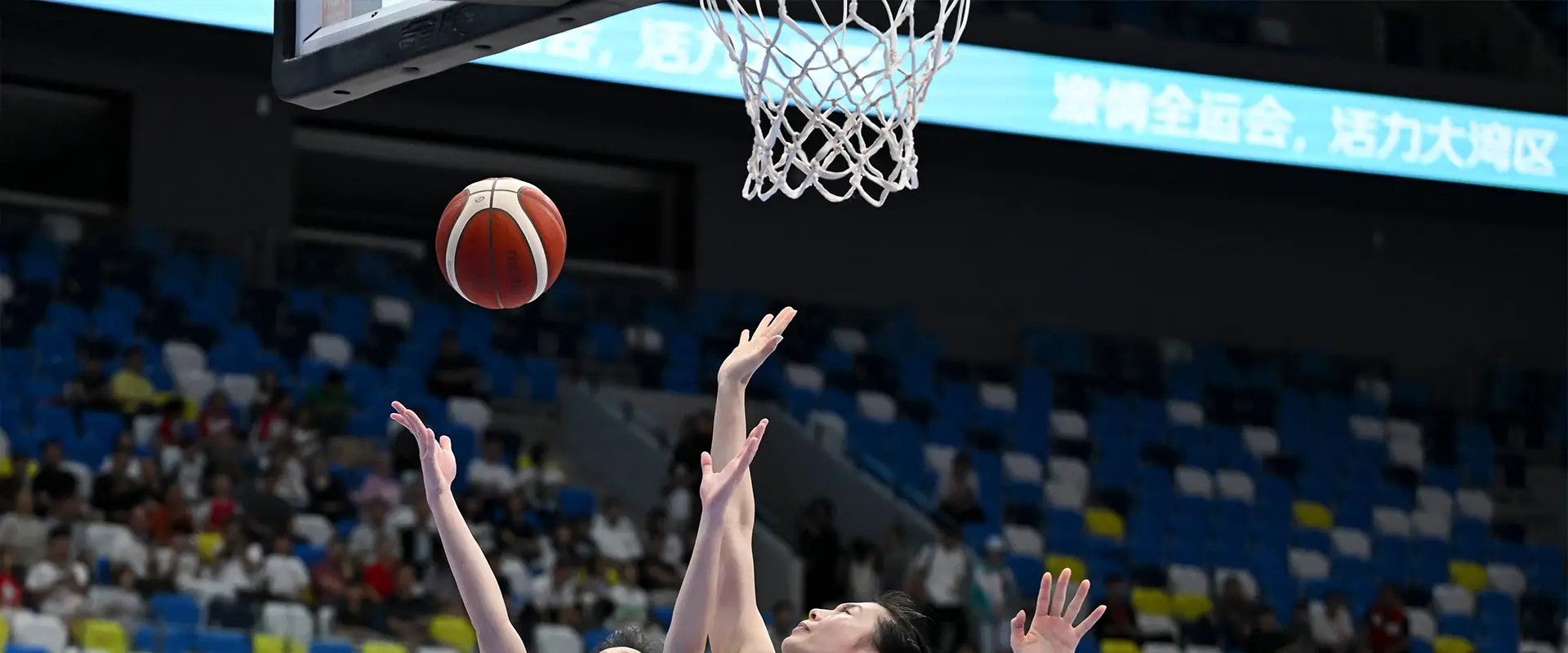
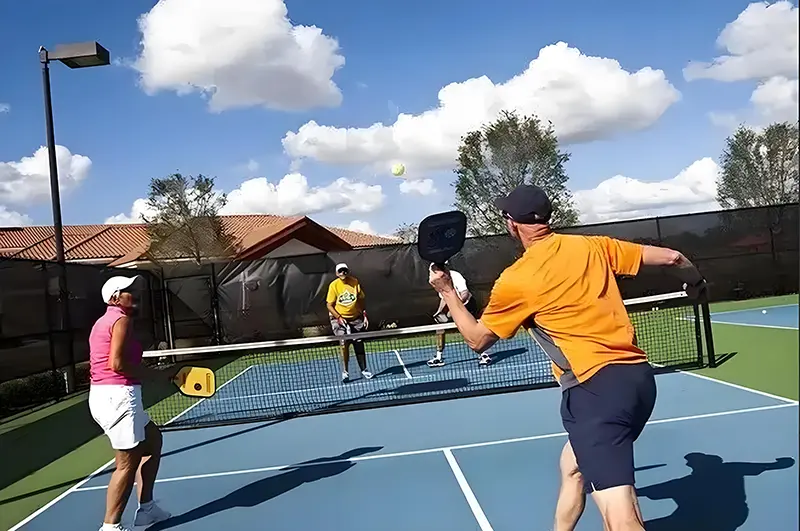
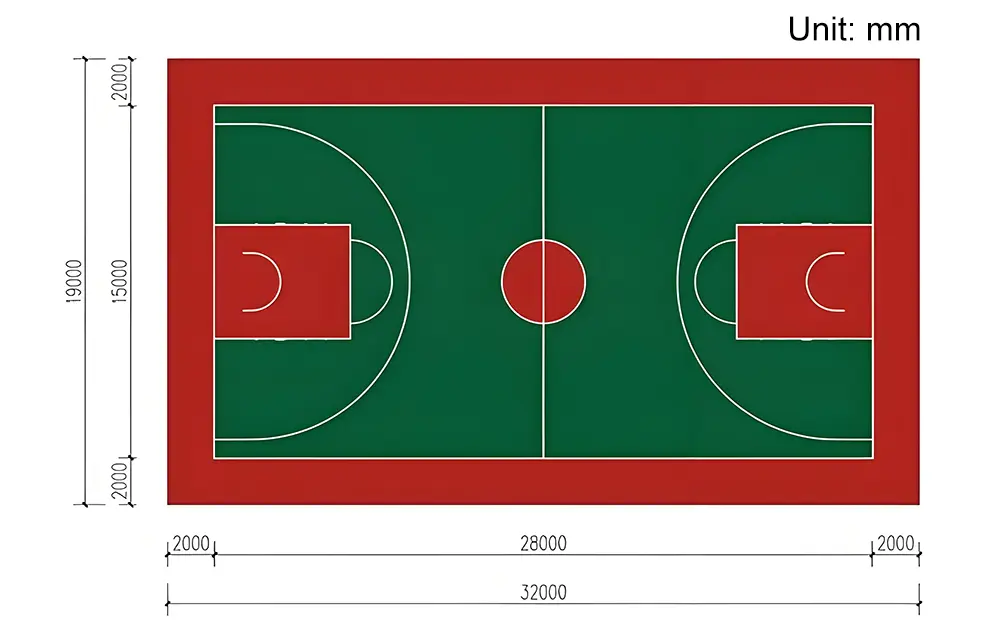
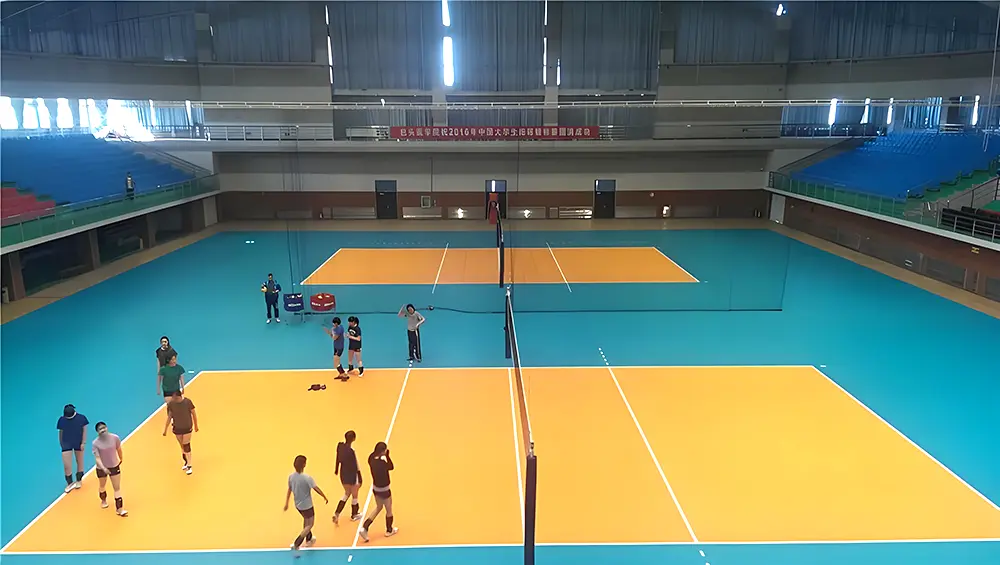
For example, in school gymnasiums or playgrounds, 4.5mm-10mm thick vinyl sports flooring can be used, with a variety of colors and surface patterns available for basketball courts, badminton courts, pickleball courts, table tennis courts, and other venues. For reusable applications, multi-functional sports flooring can be chosen.
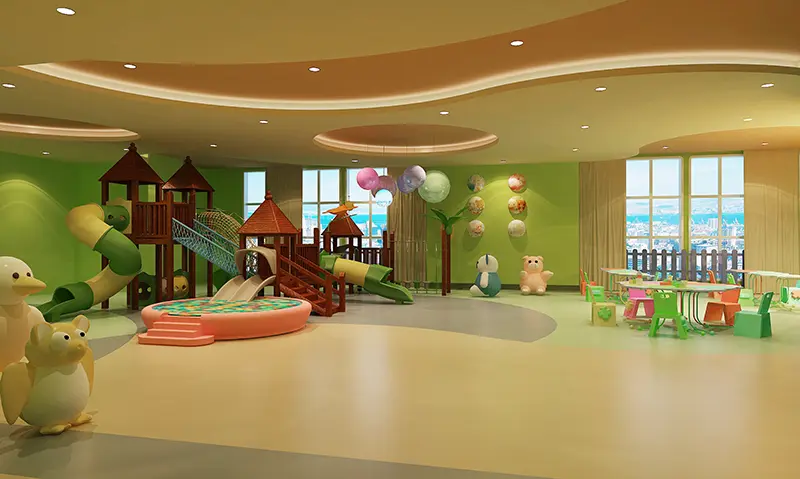
In indoor areas such as classrooms, libraries, conference rooms, and dance studios, 2.0mm-3.0mm thick commercial vinyl flooring is the best choice. It not only meets the requirements for wear resistance, slip resistance, and water resistance, but also offers lower material costs and can be installed in areas of varying sizes and dimensions to create different design styles.
Seamless Laying, No Sanitary Dead Corners: Coil PVC flooring has a width of 1.8-2.0m and a length of 20-30m, which can realize seamless laying through hot welding technology, avoiding the accumulation of dust and bacteria in the gaps. This characteristic is especially suitable for classrooms, laboratories and other areas with high hygiene requirements, and can meet the cleaning standards of school disinfection.
Quiet and Comfortable, Improve Teaching Experience: PVC flooring has good sound insulation performance, with an impact sound improvement of ≥15dB, which can reduce the noise caused by students running, dragging desks and chairs, and create a quiet teaching environment for classrooms. At the same time, the floor surface is soft and comfortable, and students will not feel tired when standing for a long time.
Precise Performance Customization, Adapt to Multi-scenario Needs: Through structural optimization, PVC flooring can meet the needs of different functional areas:
Dense base PVC flooring (thickness 2.0-2.5mm): Hard and tough, with precise force feedback, suitable for dance rooms and music rooms;
Foamed base PVC flooring (thickness 3.0-4.0mm): Good elasticity, impact absorption rate ≥35%, suitable for gymnasiums and activity rooms;
Antibacterial PVC flooring (added silver ion antibacterial agent): Antibacterial rate ≥99% against Escherichia coli and Staphylococcus aureus, suitable for laboratories and infirmaries.
Thickness and Structure Selection: For static areas such as classrooms and offices, choose 2.0-3.0mm thick dense base PVC flooring; for dynamic areas such as gymnasiums and dance rooms, choose 4.5-10.0mm thick foamed base sports PVC flooring. Avoid using thin-film PVC flooring (thickness <1.5mm), which has poor wear resistance and is prone to damage.
Environmental Certification Check: Must check the product's environmental test report, focusing on indicators such as formaldehyde emission, VOC content and heavy metal content, and prioritize products that meet EU REACH standards. For laboratories and infirmaries, choose antibacterial PVC flooring with ISO 22196 antibacterial certification.
Construction Process Control: The base course needs to be treated with self-leveling mortar to ensure flatness (3m ruler error ≤1mm). Coil PVC flooring adopts full-adhesive construction and hot welding technology at the seams to ensure seamless connection; sheet PVC flooring adopts lock-and-click installation, which is convenient for later replacement. After construction, it needs to be cured for 48 hours before use.
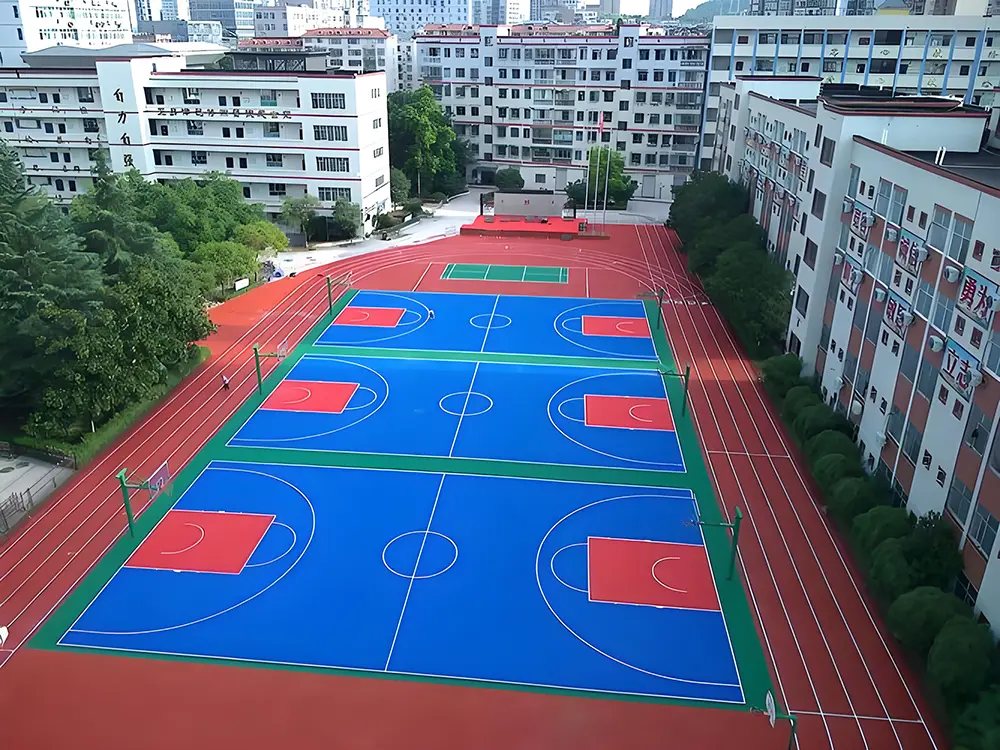
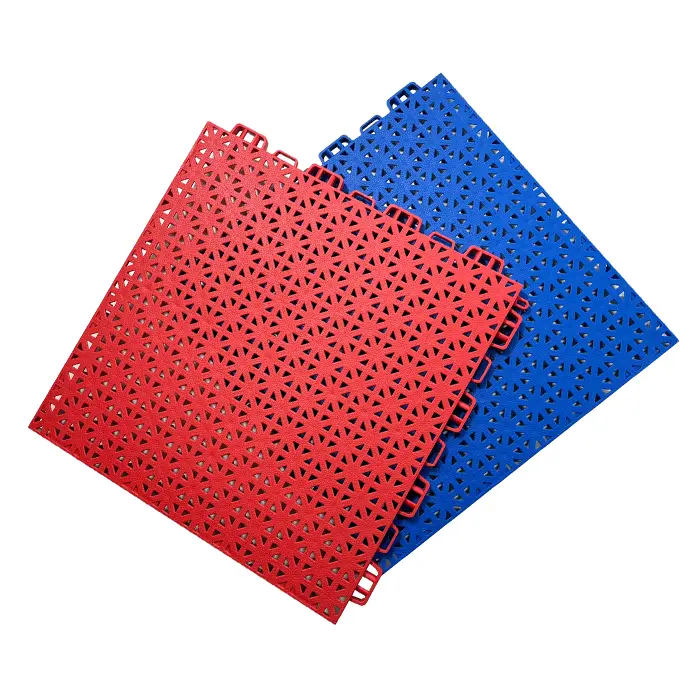
This flooring is injection molded from PP and TPE materials, making it suitable for outdoor sports fields. It can adapt to all-weather environments, drains quickly, and is easy to install, making it the best surface material for schools and kindergartens to create outdoor activity areas and basketball courts.
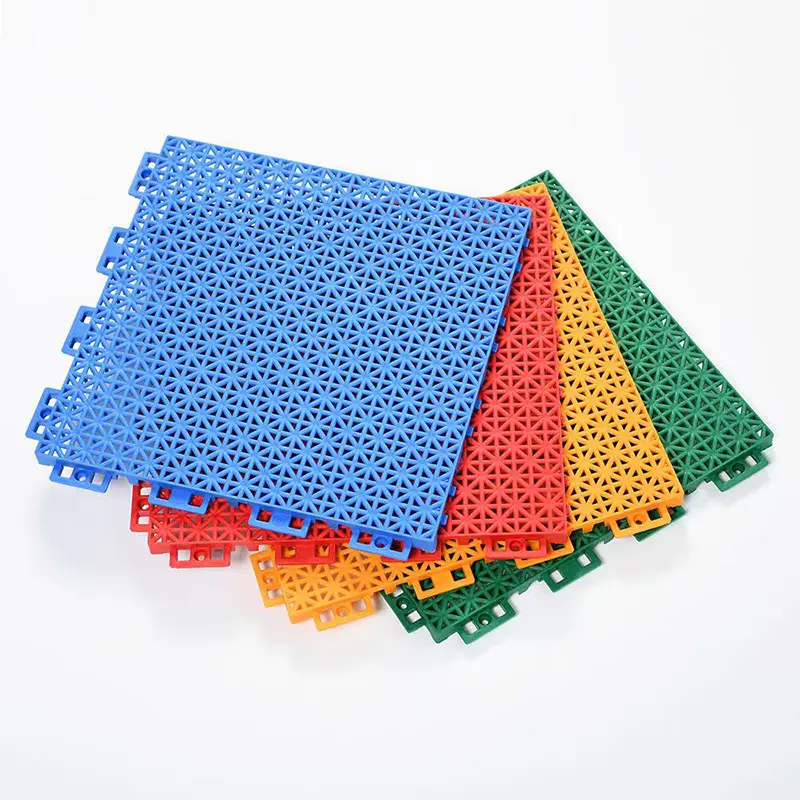
Modular Splicing, Fast Construction: The standard size of interlocking tiles is 300mm×300mm or 500mm×500mm, with a thickness of 12-20mm. The edge is designed with a male-female buckle, which can be quickly spliced by hand or rubber hammer. For a 100㎡ corridor, 2 workers can complete the laying in one day, without affecting the normal teaching order of the school. The disassembly is also flexible, which can be partially replaced according to the wear situation, reducing maintenance costs.
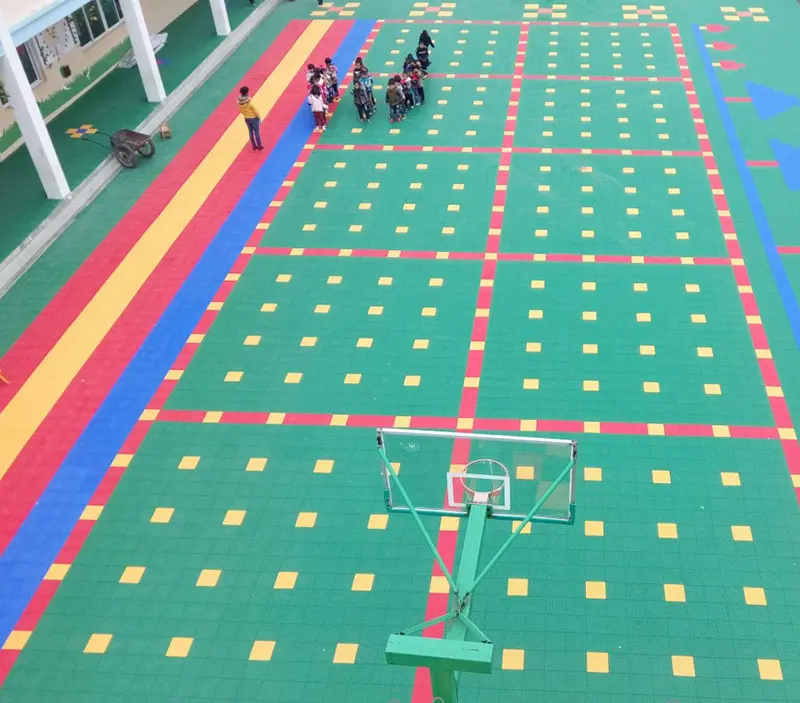
Excellent Slip Resistance and Impact Absorption: The surface of school interlocking tiles is designed with non-slip textures such as rhombus, rice grain or honeycomb, with a dry friction coefficient ≥0.75 and a wet friction coefficient ≥0.6, which can effectively prevent students from slipping when running or the ground is wet. The bottom is equipped with a reinforced rib structure and a hollow buffer layer, with an impact absorption rate of ≥25%, which can reduce the impact force when students fall and protect joints such as knees and ankles.
Waterproof and Moisture-proof, Adapt to Harsh Environments: The material itself is hydrophobic, and the splicing gap is ≤0.2mm. It can be used in humid areas such as canteens, bathroom entrances and underground corridors. It is not easy to mold or deform, and can still maintain structural stability in an environment with 30%-80% humidity.
Scenario-oriented, Refuse One-size-fits-all: Do not use the same flooring material for the entire campus. For example, choose interlocking tiles for outdoor playgrounds and canteens, and PVC flooring for classrooms and dance rooms, so as to maximize the performance advantages of materials.
Quality First, Avoid Low-price Temptation: Low-quality interlocking tiles and PVC flooring are prone to problems such as deformation, brittleness and odor emission, which not only affect the use effect, but also may endanger students' health. It is necessary to choose products from well-known brands and check the test report and certification documents.
Pay Attention to Construction Quality: The performance of flooring is closely related to construction quality. For example, the uneven base course will lead to floor deformation, and the improper welding of PVC flooring will lead to water seepage at the seams. It is necessary to choose a professional construction team with school flooring construction experience.
Formulate a Long-term Maintenance Plan: After the flooring is put into use, formulate a regular maintenance plan, such as daily cleaning of corridors and canteens, regular inspection of the wear of gymnasium flooring, and timely replacement of damaged parts, so as to extend the service life of the flooring.

Leave Your Message
Message us for free samples and quotes!