Stable commitment to every leap, customized every flat
Blog


Suning County, Cangzhou City, Hebei Province, China
16630207375
dxfloor144@gmail.com
Stable commitment to every leap, customized every flat
Blog
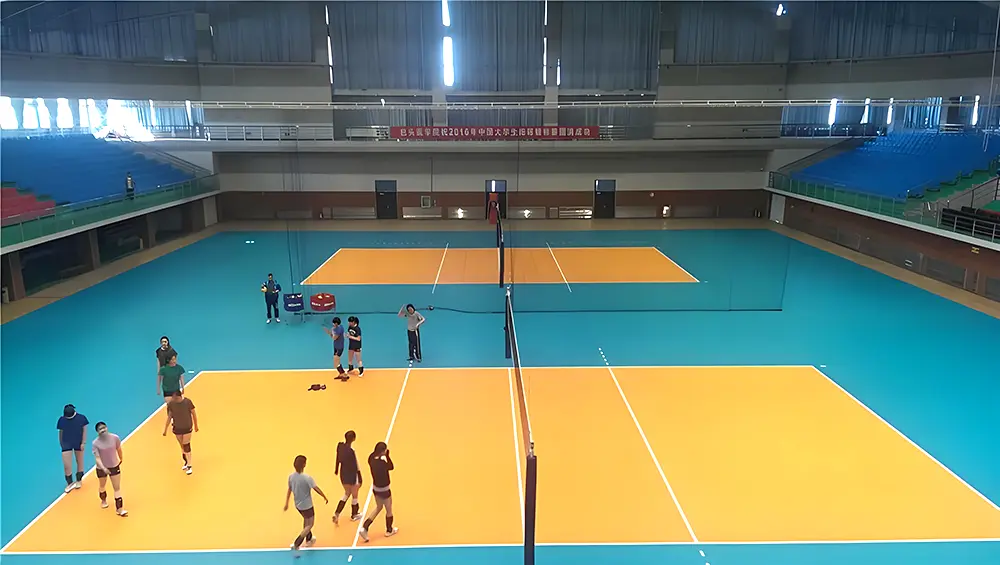
Volleyball is characterized by high-speed jumping, rapid lateral movement, and powerful landings. This requires the court surface to achieve a precise balance between slip resistance, impact absorption, consistent ball bounce, and durability. The performance requirements for volleyball court floor tiles differ between professional competition venues, school gymnasiums, and multi-functional sports facilities. Therefore, selecting the appropriate tile type based on the specific sport is crucial.
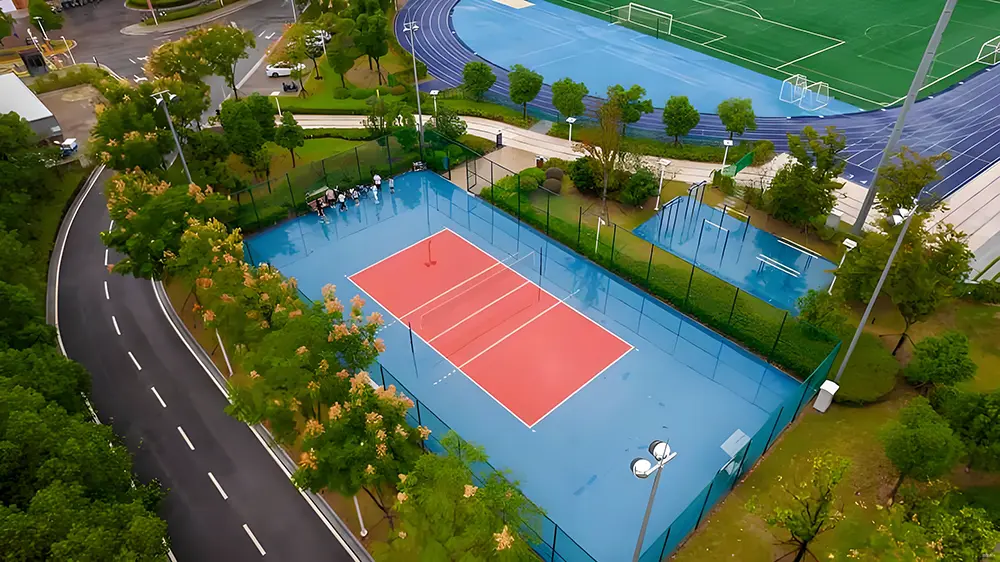
If you need to meet professional FIVB certification standards, refer to the following performance indicators:
Impact Absorption: Minimum 30% impact absorption. This indicator directly measures the floor's ability to cushion landing impacts, significantly reducing the risk of knee, ankle, and spinal injuries for athletes. Insufficient impact absorption forces athletes to adjust their force application to avoid pain, thus affecting athletic performance. Professional testing data shows that compliant flooring can reduce the impact force on joints by more than 40%.
Slip Resistance: Dry coefficient of friction 0.6–0.8. The rapid changes of direction in volleyball demand extremely high ground grip, requiring smooth starts while preventing slippage during sudden stops.
Ball bounce consistency: 85–90% bounce rate (a standard volleyball dropped from a height of 1.5m should bounce between 1.275–1.35m). Uniform ball bounce is crucial for fairness; high-quality flooring ensures a consistent bounce trajectory across the entire court, preventing unfair advantages for athletes due to variations in court surface.
Durability: Meets ASTM D4060 standards for Taber abrasion resistance testing ≥10,000 revolutions. Indoor venues face high-frequency foot friction, toe-dragging, and equipment impacts; the flooring must withstand these wear and tear over the long term without cracking, fading, or performance degradation.
Environmental safety: Low VOC emissions, compliant with FloorScore® or GREENGUARD certification. In the enclosed indoor environment, non-toxic and harmless materials effectively protect the health of athletes and staff, avoiding potential hazards from the release of harmful gases.
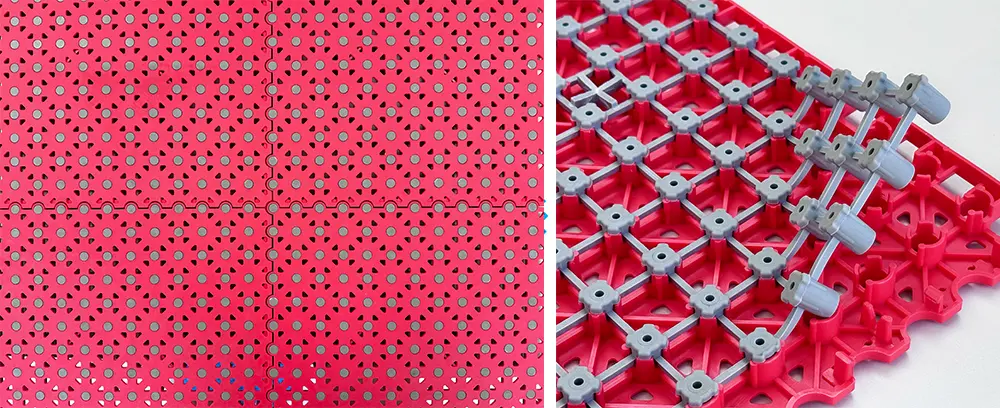
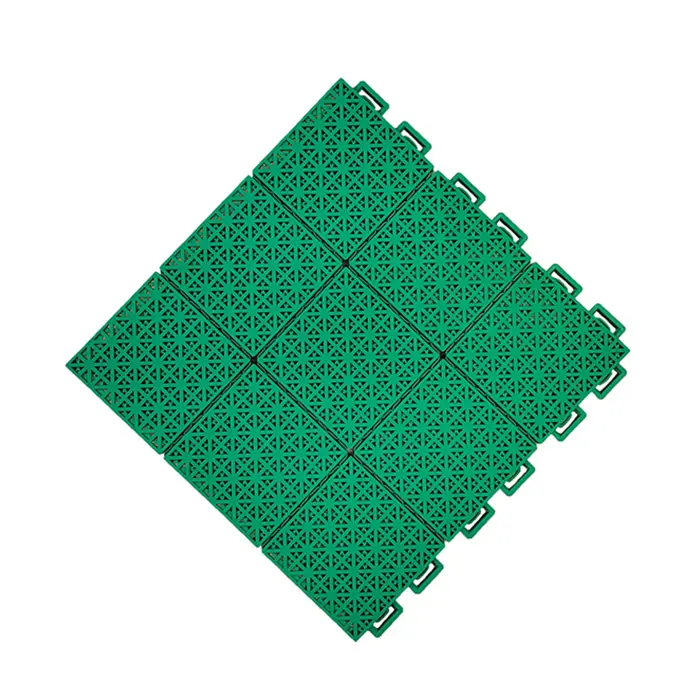
Suspended interlocking flooring uses high-density PP copolymer as raw material, with added UV stabilizers and anti-aging additives. Its suspended structure and interlocking design make installation convenient and suitable for various outdoor sports venues.
Drain-repellent perforated structure: Easily handles water accumulation after rain or snow, draining quickly and preventing surface water buildup, greatly facilitating outdoor play scheduling.
Environmentally friendly PP material: Available in both hard and soft plastic, with varying hardness and toughness to suit different usage scenarios.
Optional cushioning pads: PP interlocking tiles with rubber cushioning pads come in different models with various cushioning options.
Single point support:
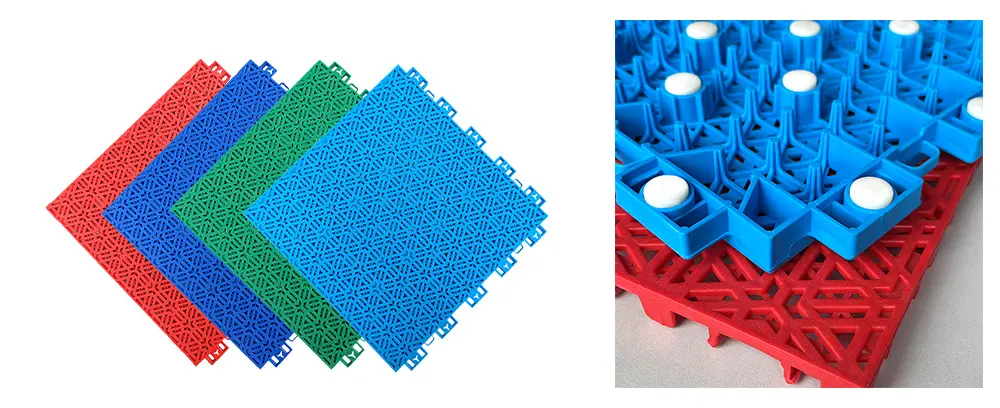
Flat pad:
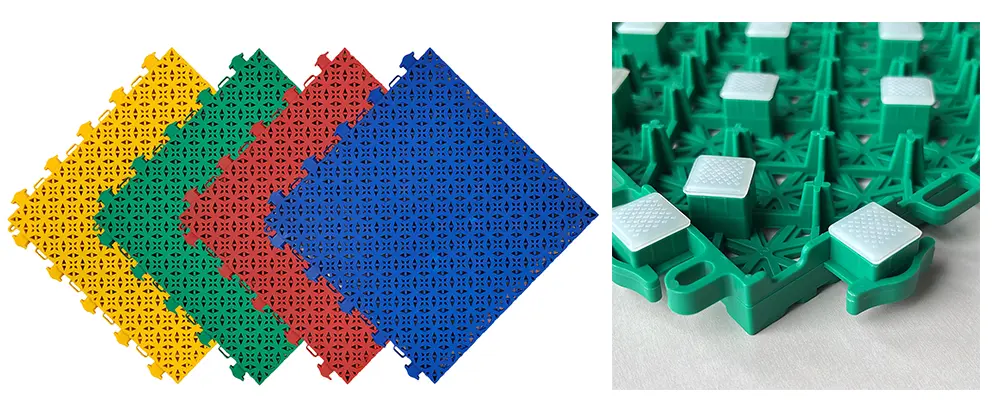
Connected cushioning pads:
The size and quantity of interlocking sports flooring tiles need to be selected based on the actual area of the venue. As a supplier, we typically offer the best prices for MOQs above 3000 sqm. Therefore, we are happy to provide complete sports flooring solutions for your project, enabling the construction of more venues with less procurement costs.

Leave Your Message
Message us for free samples and quotes!