Stable commitment to every leap, customized every flat
Blog


Suning County, Cangzhou City, Hebei Province, China
16630207375
dxfloor144@gmail.com
Stable commitment to every leap, customized every flat
Blog
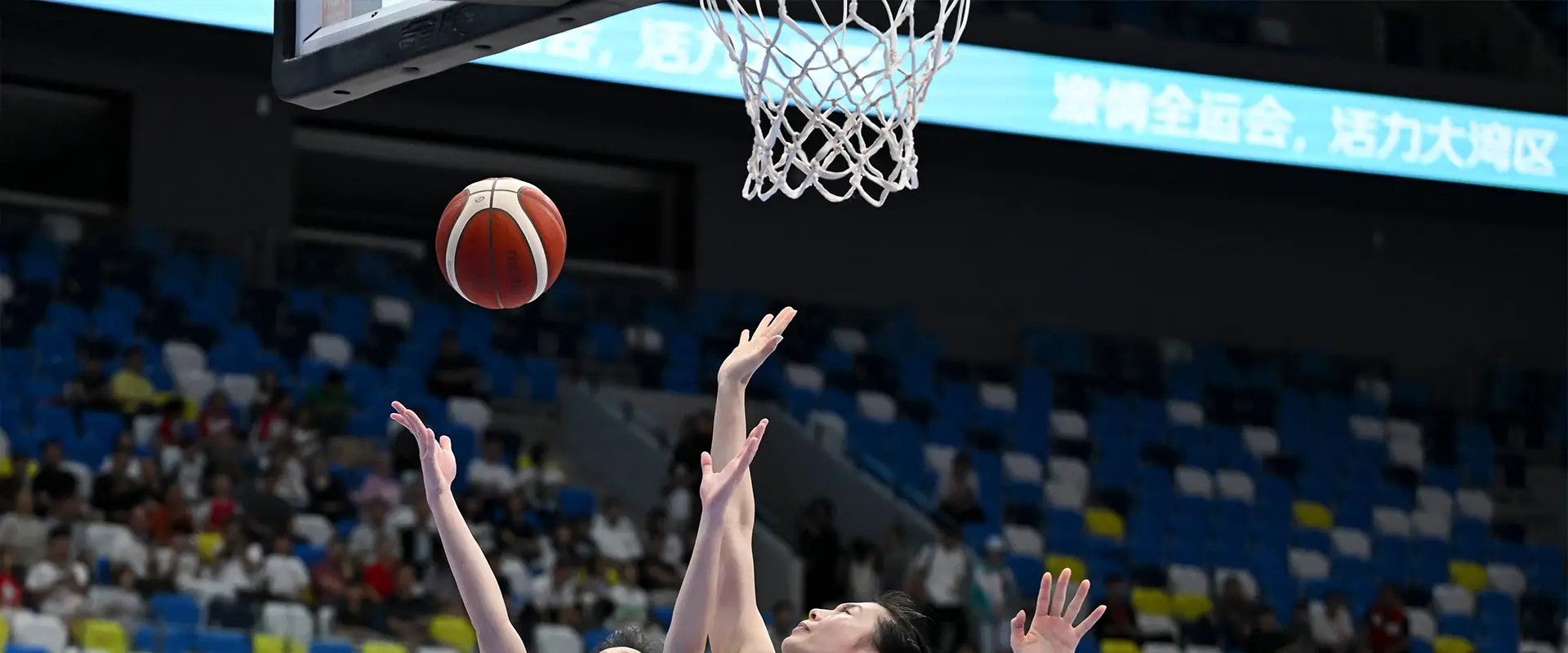
PVC vinyl basketball court flooring offers performance comparable to solid wood flooring for indoor use. Different colors and patterns can be chosen to match the specific sports venue design and style. Flooring material is one of the most crucial budget elements in basketball court construction, and construction costs are a critical factor. The overall price is typically determined by the court area and the thickness of the vinyl flooring roll. Understanding the different types of PVC basketball court flooring helps purchasing companies make informed choices.
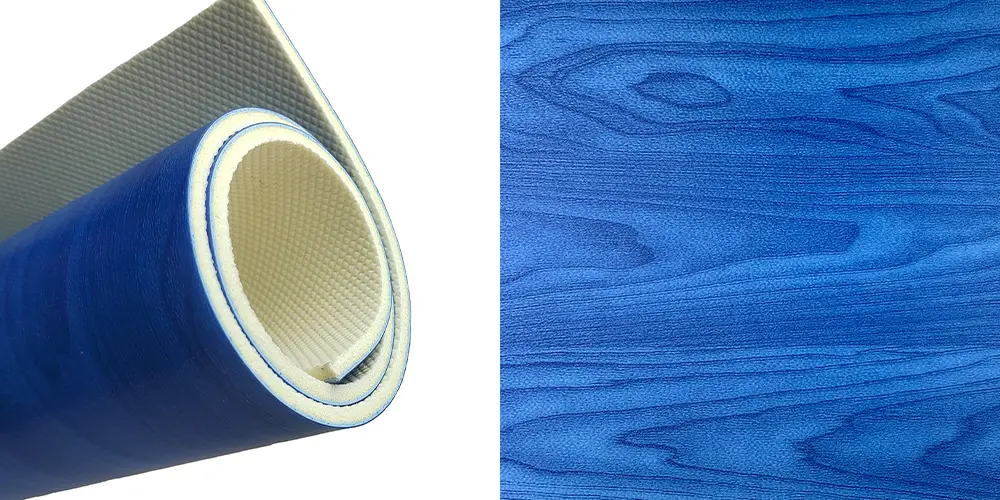
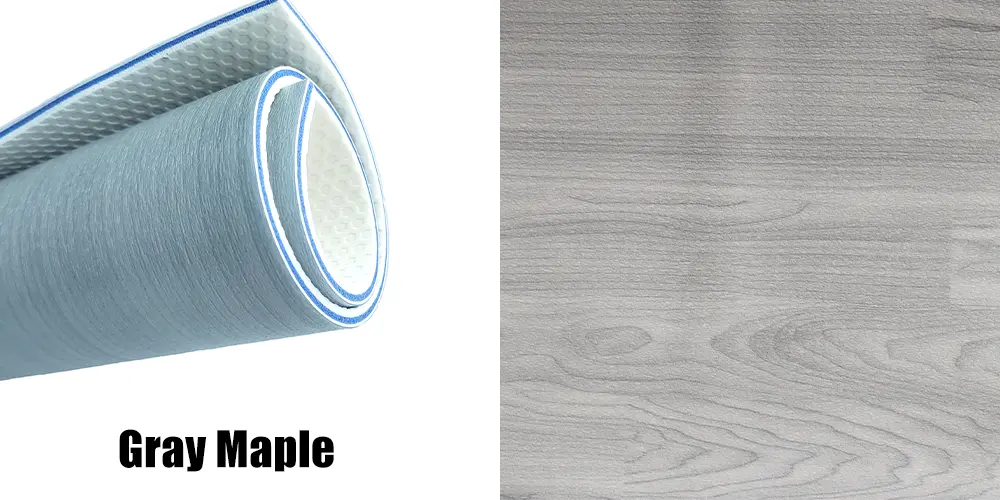
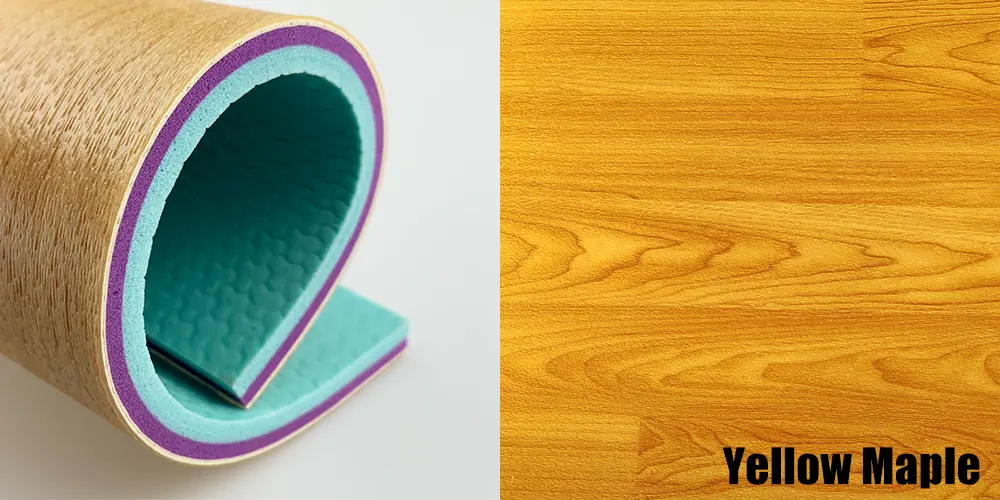
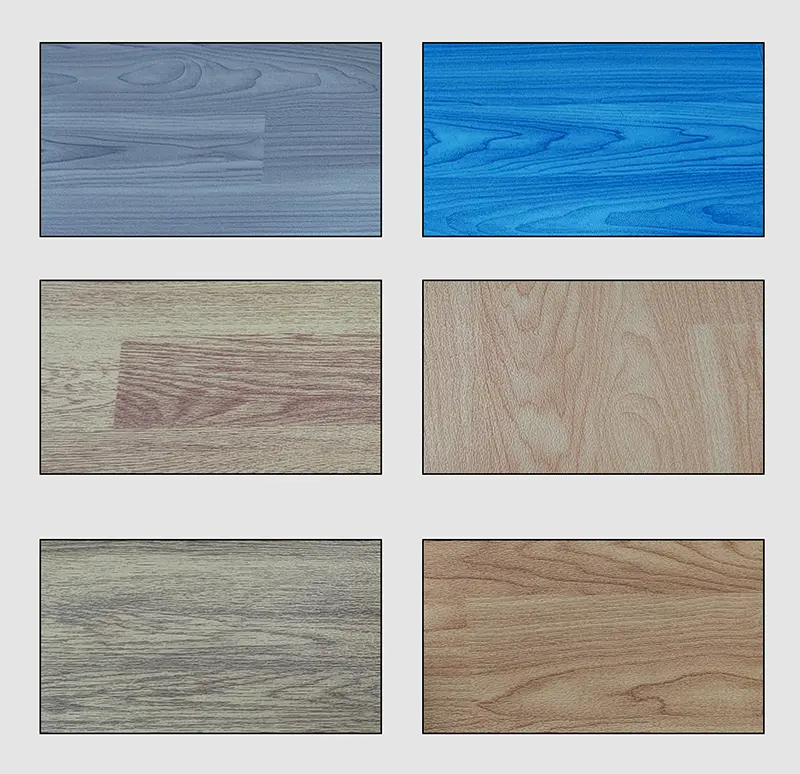
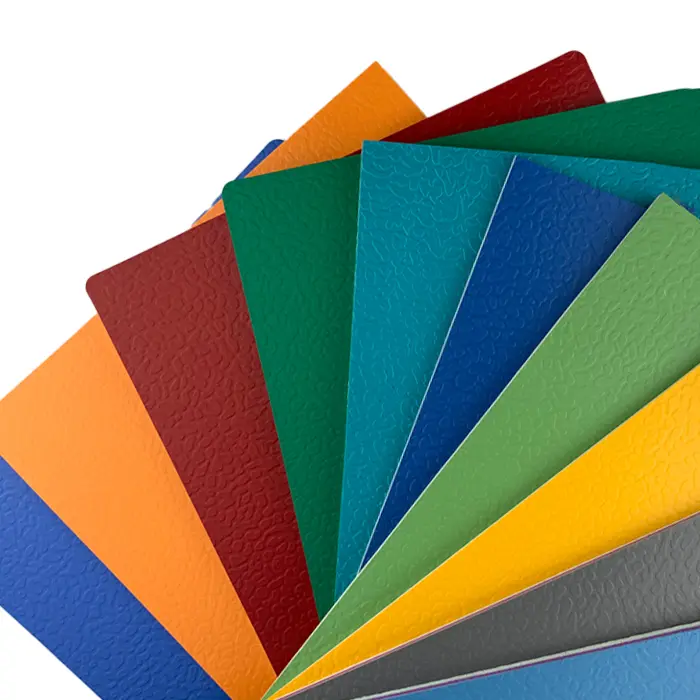
PVC rolls often feature various patterns and textures to suit different sports surfaces. Maple is a typical basketball court surface, mimicking real maple wood patterns to achieve the same effect as genuine maple flooring after completion.
Common Colors:
Blue Maple
Grey Maple
Yellow Maple
Black Maple (similar to walnut, very attractive)
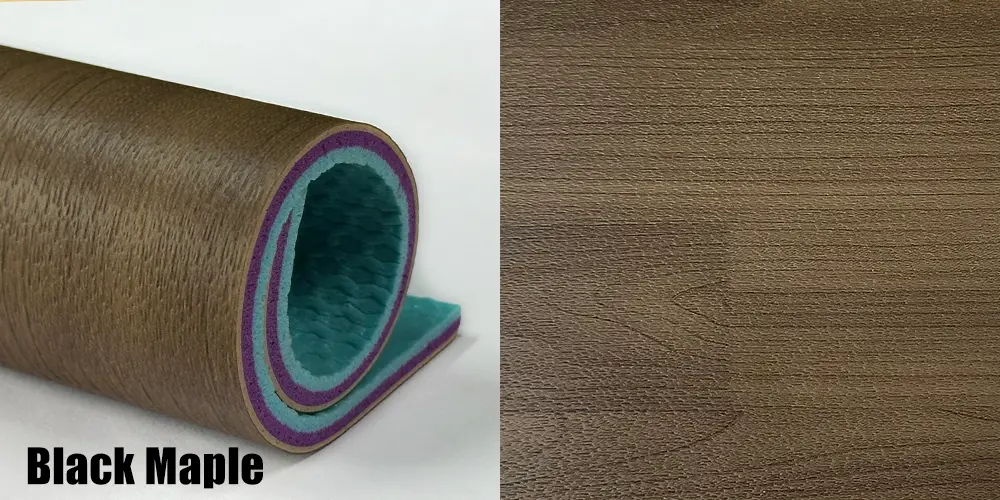
Even more impressive is the availability of different colors and color combinations for enhanced design effects. For example, the entire basketball court might use yellow maple wood, while the shooting area might use blue maple wood.
Like maple, oak can be chosen in different colors, but the difference lies in the slightly different grain patterns of the wood. Therefore, the overall effect of the basketball court will be varied.
PVC sports flooring thickness ranges from 4.5mm to 12mm. The choice of thickness is usually determined by the actual venue and frequency of use. For example, in professional competition and training venues, a thicker 5.0-8.0mm is recommended. For ordinary communities and sports clubs, 4.5mm-6.0mm is sufficient.
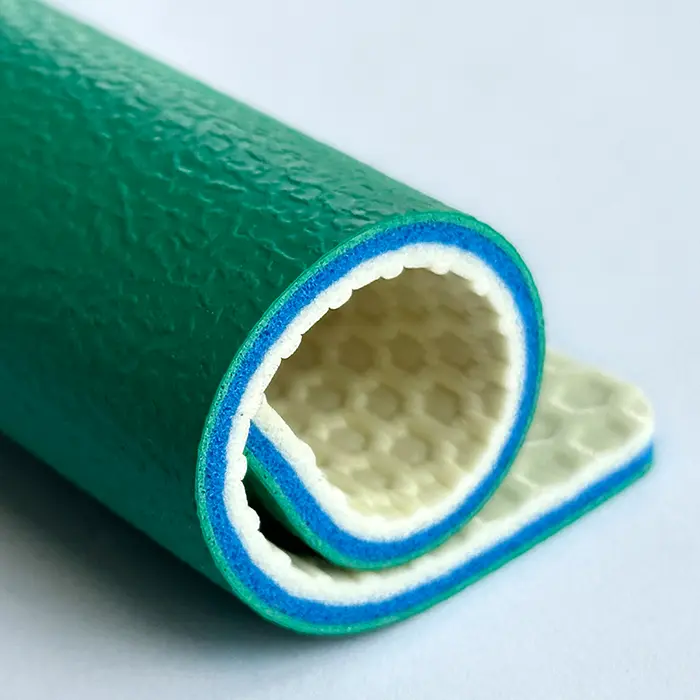
Thickness is mainly related to the foam layer of the flooring. The thicker the foam layer, the better the cushioning performance, and the better the safety of the players. However, the ball's rebound rate may also be reduced, so thicker is not always better.
Furthermore, thickness is not just about a thicker foam layer; the surface wear layer is also thicker, increasing the lifespan. Additionally, double-layer fiberglass helps stabilize the edges and prevent warping. These are all factors that contribute to the improved performance of thicker sports flooring.
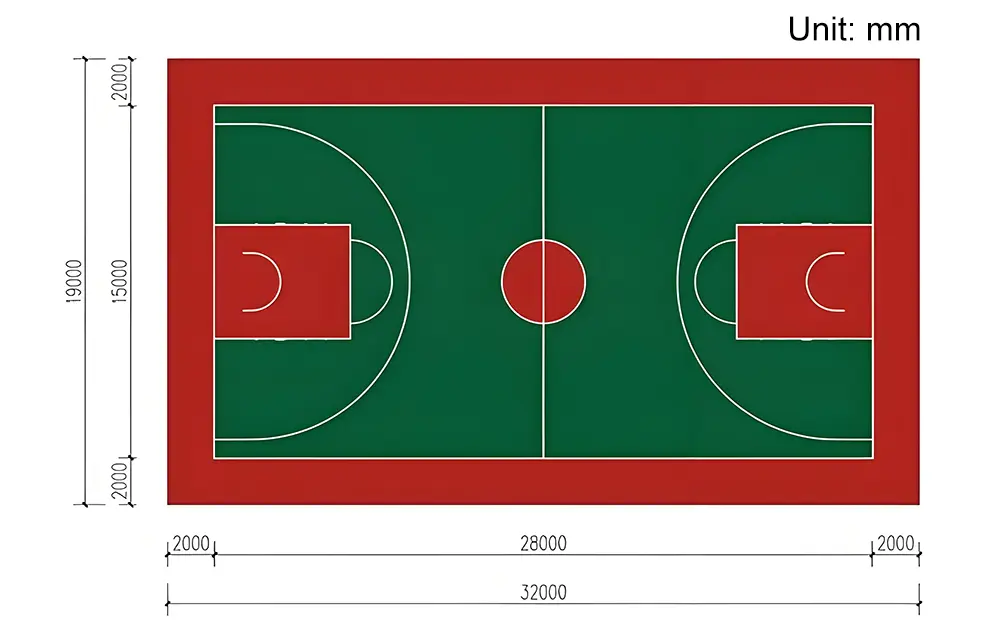
Standard basketball court flooring installation typically includes the area outside the lines. The playing area inside the lines can use the wood grain pattern mentioned above, while the area outside the lines can use other patterns, such as the Gem pattern.
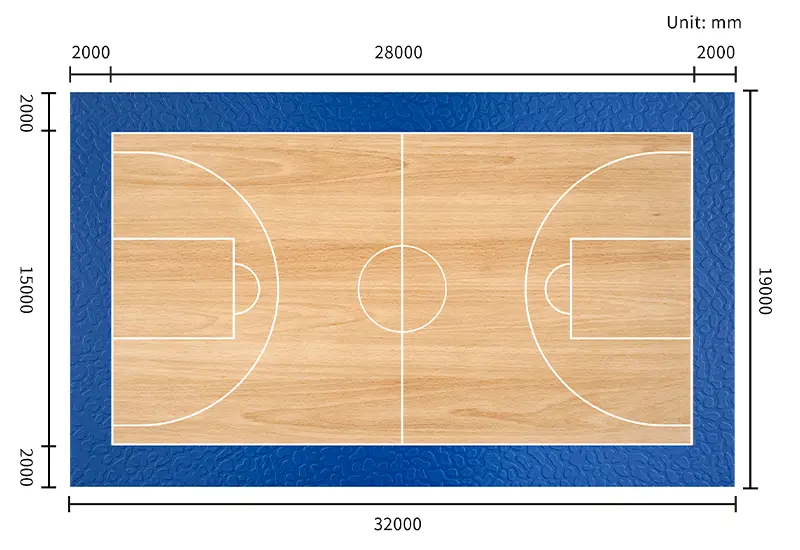
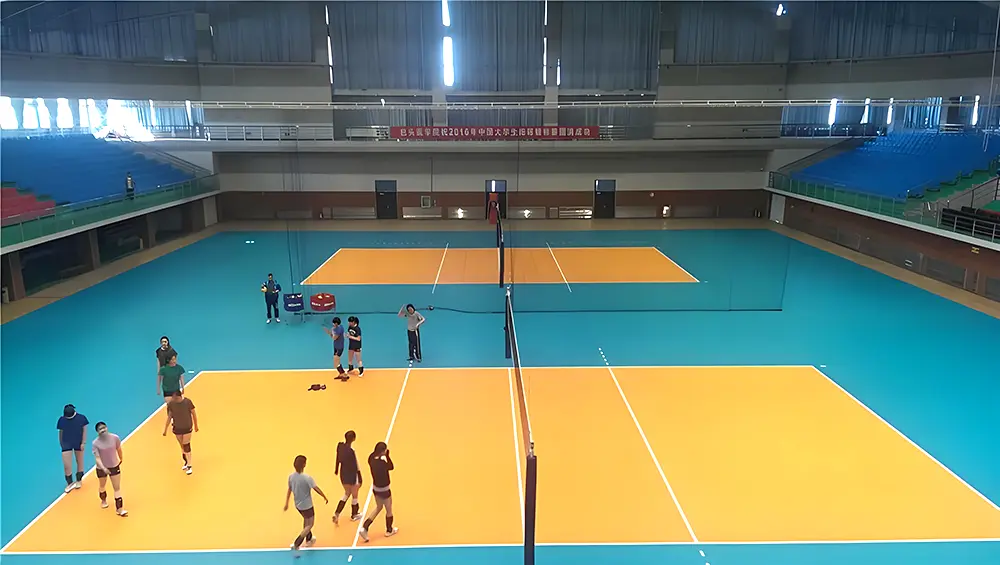
This pattern is commonly used in volleyball and tennis courts; combining both can create a better design effect.
After understanding the types of PVC indoor basketball court flooring, consider whether its performance meets international standards and the required number of rolls. Obtain samples to verify if the product meets your purchasing requirements, rather than simply choosing based on price.
If you are a sports facility construction company, or a retailer or distributor in a particular country or region, as a sports flooring manufacturer, we look forward to collaborating with partners worldwide to create professional and comfortable basketball court spaces. Welcome to obtain our product catalog and free samples!

Leave Your Message
Message us for free samples and quotes!