Stable commitment to every leap, customized every flat
Blog


Suning County, Cangzhou City, Hebei Province, China
16630207375
dxfloor144@gmail.com
Stable commitment to every leap, customized every flat
Blog
The choice of outdoor playground flooring tiles directly impacts the activity experience and children's safety in the construction of outdoor children's activity spaces. Flooring materials cover a variety of types, such as outdoor kindergarten flooring, as well as public fitness and entertainment areas like playgrounds. When purchasing flooring materials, factors such as weather resistance, waterproofing and drainage, and cost must be considered in addition to their intended use.
This article will start with the core types of outdoor playground flooring tiles, recommending the best flooring materials and highlighting key considerations during selection, up to installation. It provides practical guidance for playgrounds, kindergartens, and other projects, helping you choose the most suitable flooring material.
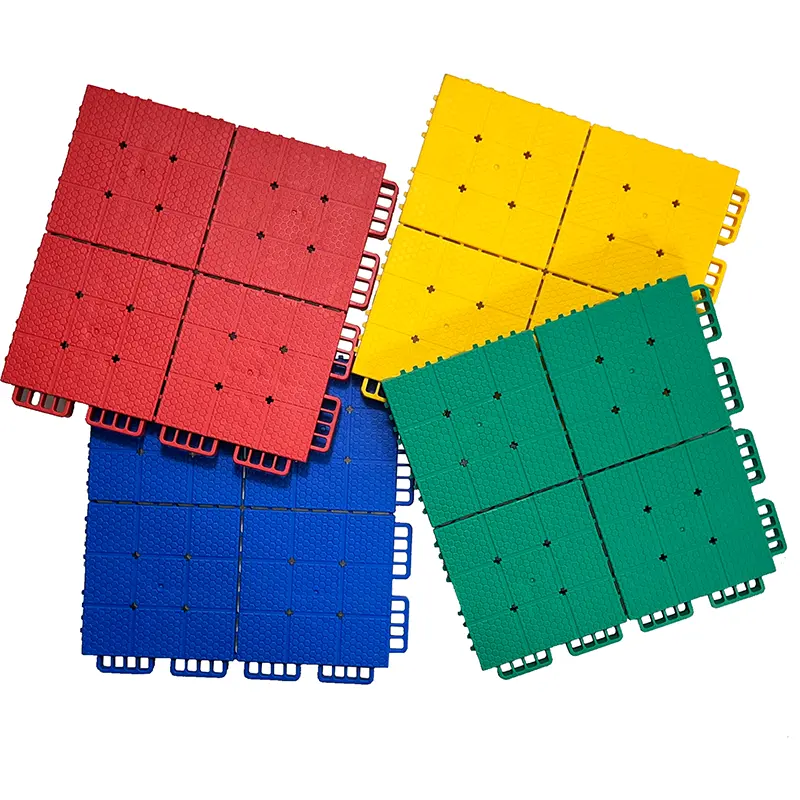
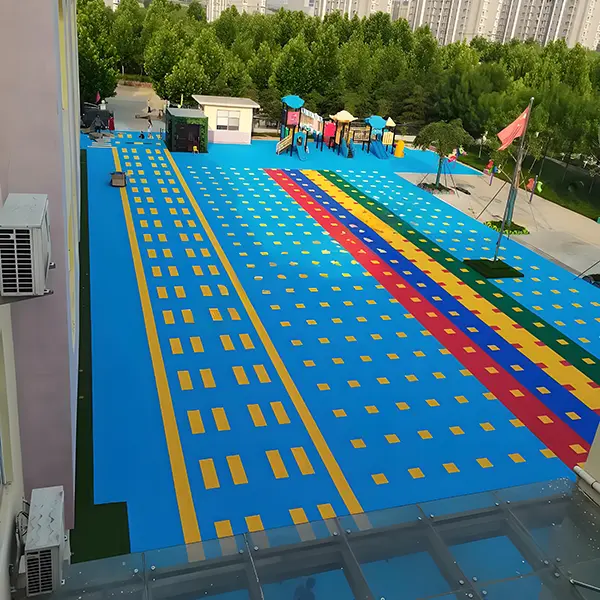
Made of environmentally friendly PP material, these tiles feature interlocking joints for easy installation, disassembly, and maintenance. Different color options are available to create unique playground patterns. Waterproof and weather-resistant, they are inexpensive and suitable for most outdoor playgrounds, making them the mainstream choice for outdoor playgrounds worldwide.
EPDM synthetic rubber granules are mixed with polyurethane adhesive and laid on-site. It comes in a variety of colors and can be customized with patterns, offering excellent cushioning performance. However, it is more expensive than PP tiles, prone to fading and chalking under prolonged outdoor exposure, and has a long installation period.
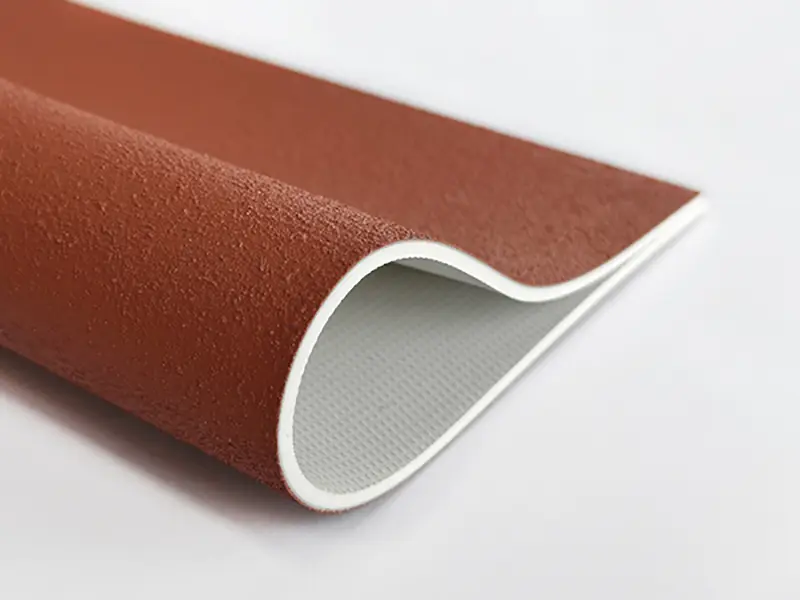
Made of environmentally friendly PVC and an acrylic coating, it comes in rolls and requires professional hot welding for installation. Acrylic materials are specifically designed for outdoor use, offering good wear resistance and better cost-effectiveness compared to other materials. It is typically used in professional sports courts, such as outdoor pickleball courts. For children's playgrounds, it is less cost-effective than interlocking floor tiles and has better maintainability.
Made with anti-corrosion treated solid wood boards, it is laid in a spliced pattern, offering a natural and beautiful appearance and comfortable feel underfoot. The disadvantage is its extremely poor outdoor weather resistance, making it prone to rotting, warping, and cracking. It requires regular painting and maintenance, resulting in high maintenance costs.
The most basic outdoor flooring material, made of poured concrete or laid with ordinary tiles, it is extremely inexpensive. It is simple to install and has strong load-bearing capacity. However, children are prone to injury from falls, the surface is smooth and slippery, and there is no drainage design.
While the price of a single tile varies depending on the location, it is cheaper than other materials. Furthermore, compared to sports courts, outdoor recreational playgrounds don't require specialized cushioning or ball bounce performance. In other words, basic PP interlocking flooring is sufficient, and models without cushioning pads can be chosen.
PP interlocking flooring requires no waxing, painting, or touch-ups; simply rinsing with water or wiping with a pressure washer is enough. Maintenance is simple and extremely low-cost. If a single tile is damaged, it can be replaced directly.
PP material itself does not absorb water and is moisture-proof. Even after prolonged immersion in rainwater, it will not soften or deform.
The flooring features a perforated design and drainage channels at the bottom, forming a fully connected drainage network when spliced. Combined with a 3-5mm gap between the floorboards and the ground, rainwater can quickly infiltrate and flow away.
Using food-grade modified PP copolymer as the core raw material, a commitment we, as an outdoor modular flooring manufacturer, can guarantee, it is formaldehyde-free, heavy metal-free, and contains no irritating substances, meeting ISO and SGS environmental certifications.
Added with professional UV stabilizers, it will not chalk, crack, or discolor.
Tolerates extreme temperature variations from -30℃ to 70℃.
Distinguishing Features: High-quality PP flooring has a uniform color, no impurities, no odor, feels substantial and resilient, and is not easily bent or broken; inferior flooring is dark in color, has impurities or spots, feels thin, is easily bent, and releases a pungent odor at high temperatures. A bending test can be performed on-site during purchase.
Choose PP tiles with simple textured patterns on the surface. Depending on the actual site requirements, a test report may be needed to avoid slipping in rainy weather or after sweating.
Optimize the bottom with elastic support columns or cushioning pads to improve impact absorption.
The interlocking clips are the core structure of PP interlocking flooring, directly determining the stability and safety after installation. Poor quality clips can easily loosen and warp after installation, leading to tripping injuries for children.
For outdoor playgrounds, prioritize products with a thickness of 1.3cm or more, balancing cushioning performance and durability.
If the area is used frequently, choose thicker models or those with cushioning pads.
Calculate the required number of outdoor flooring tiles based on the area to balance procurement costs.
Consider local climate conditions and choose products with high and low temperature resistance and waterproofing as appropriate.
No professional installation team is needed; ordinary people can install it. Installation and disassembly are simple and efficient. We can provide practical tutorials.
Not necessarily. Thicker thickness should be chosen based on the frequency of use of the outdoor playground, the site's positioning, and budget. A suitable thickness is key.
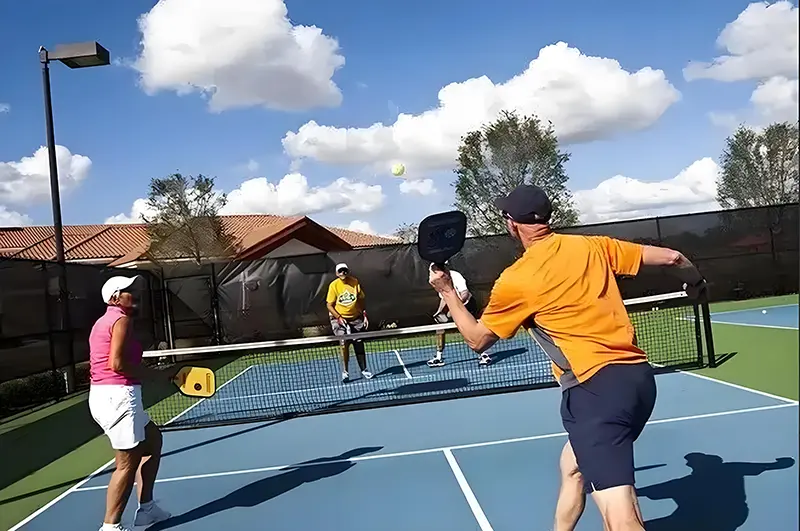
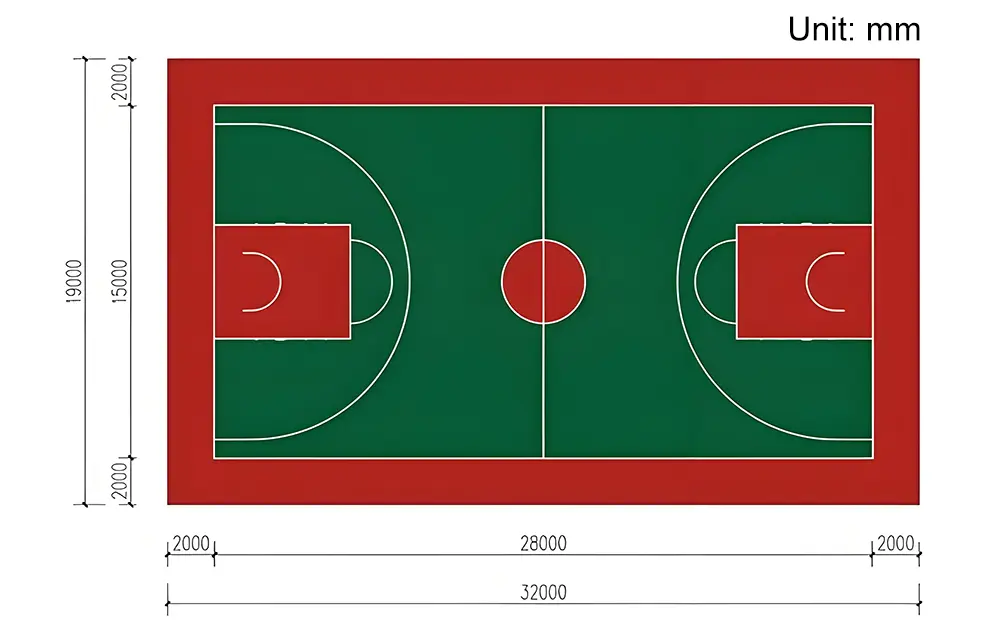
Of course, our interlocking tiles can be used in basketball court flooring, pickleball courts, badminton courts, and other sports courts, and its multi-functionality is also suitable for outdoor activity spaces.
We produce modular floor tiles in multiple models and patterns, as well as materials such as PVC and acrylic, to meet different outdoor usage requirements.

Leave Your Message
Message us for free samples and quotes!